Mobile App Development
iOS and Android apps for field crews, consumer products, and B2B tools — built to work offline, pass store review, and connect to APIs you control.
iOS and Android apps for field crews, consumer products, and B2B tools — built to work offline, pass store review, and connect to APIs you control.
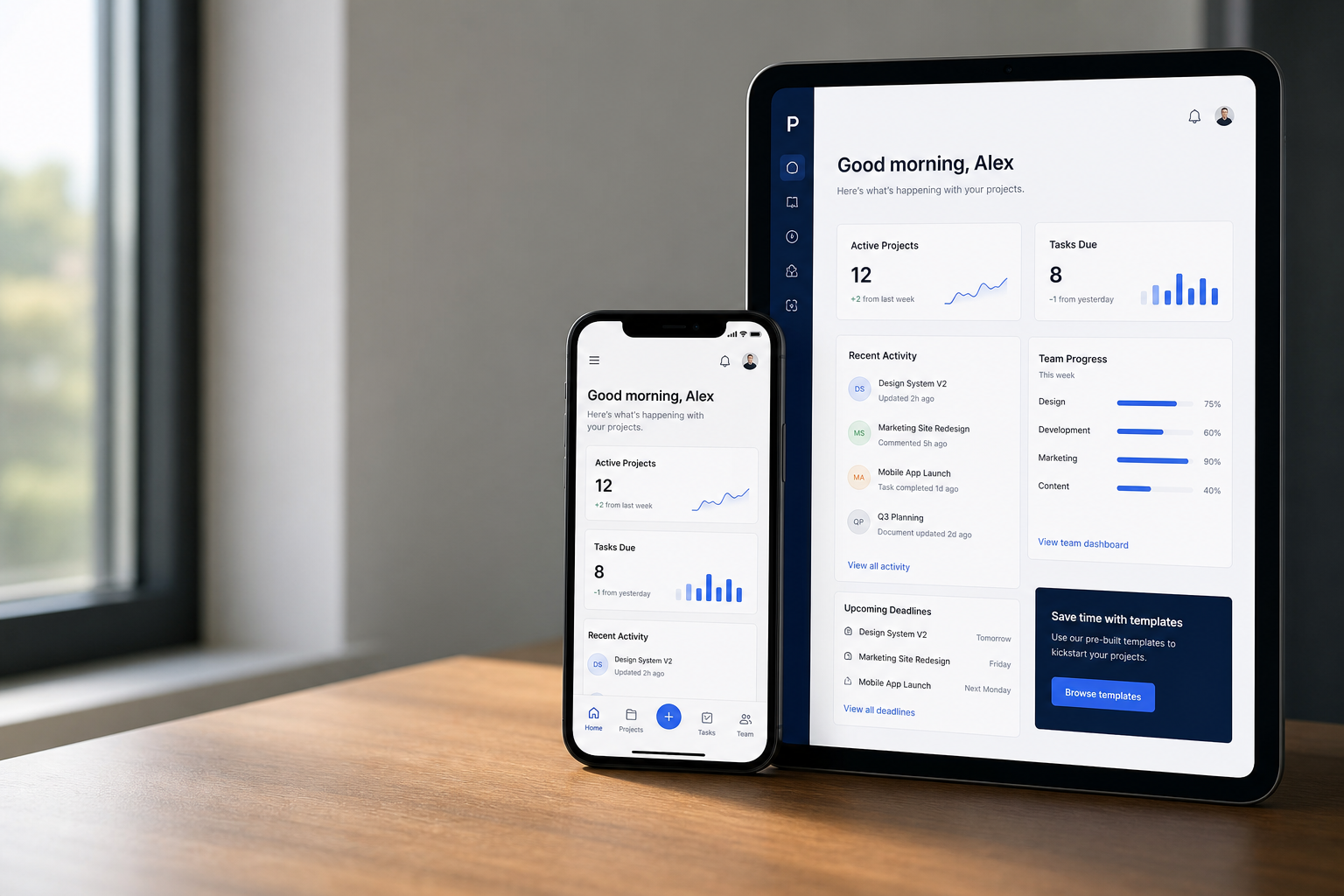
Your warehouse staff. Your delivery drivers. Your sales reps between client visits. They need an app that works.
We build mobile applications where context matters — GPS check-ins, barcode scanning, photo uploads on slow networks, push notifications that actually get read. Native Swift and Kotlin when platform performance is critical. React Native or Flutter when one codebase must ship to both stores without doubling the budget.
Apps do not live in isolation. We pair every mobile project with the API layer it needs — auth, sync, file storage, admin dashboards for your back office. You get TestFlight and internal Android builds within weeks, not months of invisible back-end work followed by a rushed UI sprint.
Store approval, backend sync, and device permissions are part of the product. We include them in scope from the start.
Thumb-zone layouts, gesture patterns, and onboarding flows tested on actual phones. A technician wearing gloves should still tap the right button.
Native or cross-platform implementation with platform-specific polish where users notice — navigation transitions, haptics, biometric login.
Local databases, conflict resolution, and background sync queues. Data captured in a basement parking lot uploads when signal returns.
Targeted alerts with deep links into the right screen. Job assigned → tap → open task detail. No generic "you have a message" dead ends.
App Store and Play Console setup, privacy nutrition labels, screenshot assets, and review response when Apple asks why you need location access.
Event tracking for feature adoption, crash dashboards with symbolicated stack traces, and release health metrics per app version.
Physical devices in hand every sprint. Simulators lie about performance and touch targets.
We map core user tasks, device capabilities needed, and store requirements. Native, cross-platform, or phased — decision documented with reasons.
Interactive prototypes on real phones. Field staff walk through a job completion flow before we write the sync layer.
Bi-weekly TestFlight and internal APK builds. Automated UI tests plus manual passes on low-end Android hardware — not just the latest iPhone.
Store submission, staged rollout, and crash monitoring for the first thousand users. Hotfix path documented before launch day nerves set in.
We have rescued apps stuck in review limbo. Prevention is cheaper.
Users feel the difference instantly — slow transitions, no offline mode, no push. A responsive site in a WebView gets one-star reviews and store rejection for minimal native value.
Testing only on flagship Samsung phones misses budget devices your field team actually carries. We test screen sizes, OS versions, and memory limits that break lazy image loading.
An app with no API is a demo. Auth, data sync, and admin tooling must ship in parallel — not as a "phase two" surprise that delays store launch by a quarter.
Chosen per project — native performance where it matters, shared code where it saves months.